
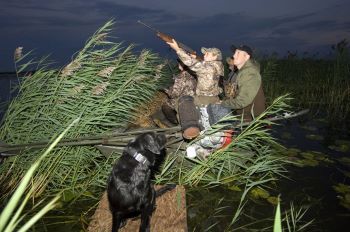
As waterfowl hunting season begins, the Michigan Invasive Species Program is asking hunters across the state to take extra precautions to prevent the spread of invasive species.
Problem species
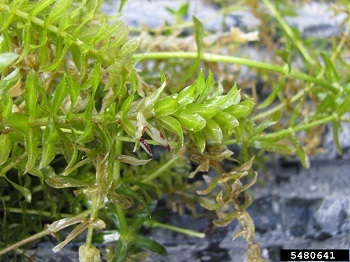
 Hydrilla, considered one of the world’s most invasive aquatic plants, was found in private ponds in southwest Michigan in fall 2023. The Department of Environment, Great Lakes, and Energy is working with landowners to eradicate the infestation. In 2024, a hydrilla detection in Ontario, Canada forced the closure of a portion of the Hillman Marsh Conservation Area popular with waterfowl hunters. Hydrilla, considered one of the world’s most invasive aquatic plants, was found in private ponds in southwest Michigan in fall 2023. The Department of Environment, Great Lakes, and Energy is working with landowners to eradicate the infestation. In 2024, a hydrilla detection in Ontario, Canada forced the closure of a portion of the Hillman Marsh Conservation Area popular with waterfowl hunters.
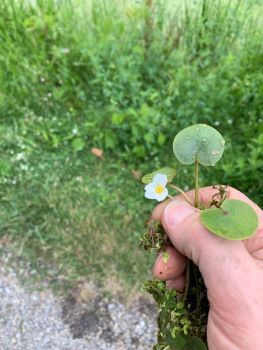
Glyceria maxima (also known as rough mannagrass), an invasive plant similar to phragmites, has been found in the Dollarville Flooding in Newberry. The Department of Natural Resources is working with the Three Shores Cooperative Invasive Species Management Area to manage the infestation. In addition to these new invasive plants, concern remains about the spread of European frog-bit and invasive phragmites. All four species tend to grow in slow-moving waters – just the kind of places that ducks and geese flock to. |
Why be concerned?
 Invasive phragmites and Glyceria maxima are tall, reed-like grasses that outcompete native species along shorelines and in shallow waters and block access for humans and wildlife. Invasive phragmites and Glyceria maxima are tall, reed-like grasses that outcompete native species along shorelines and in shallow waters and block access for humans and wildlife.
Both European frog-bit and hydrilla create thick mats of vegetation that can hamper the movement of diving ducks and reduce the availability of snails, mollusks and other food sources. Plants can get caught in boat motors and gear, making it harder to navigate prime hunting areas. Infestations can spread to new bodies of water when plant fragments, rhizomes (root structures) or small, seed-like turions attach to boats, trailers, gear and even dogs. |
Take action!
To protect Michigan’s waterfowl habitat, hunters are asked to take the following precautions:
|
Remember that Michigan boating laws require boaters to pull plugs, drain water and remove plants and debris from boats and trailers before getting on the road.
Hunters are encouraged to use synthetic materials to camouflage boats and blinds or choose known native species like cedar to avoid accidental selection of invasive plants.
A helpful video, Invasive species: Phragmites and waterfowl hunters, and more information about invasive species can be found at Michigan.gov/Invasives.
Michigan’s Invasive Species Program is cooperatively implemented by the Michigan departments of Agriculture and Rural Development; Environment, Great Lakes, and Energy; and Natural Resources.

Click To Submit Press Releases, News, Calendar Items, and Community Events to mediaBrew radio stations WFXD, WKQS, WRUP, GTO, Fox Sport Marquette, and 106.1 The Sound
Marquette, Michigan Calendar; Ishpeming Calendar; Negaunee Calendar; Gwinn Calendar; Negaunee Calendar and Events; Upper Peninsula Calendar of Events; Escanaba Events and Calendar